August 20, 2026
Dog Separation Anxiety: Signs, What Helps, and When to Get Support
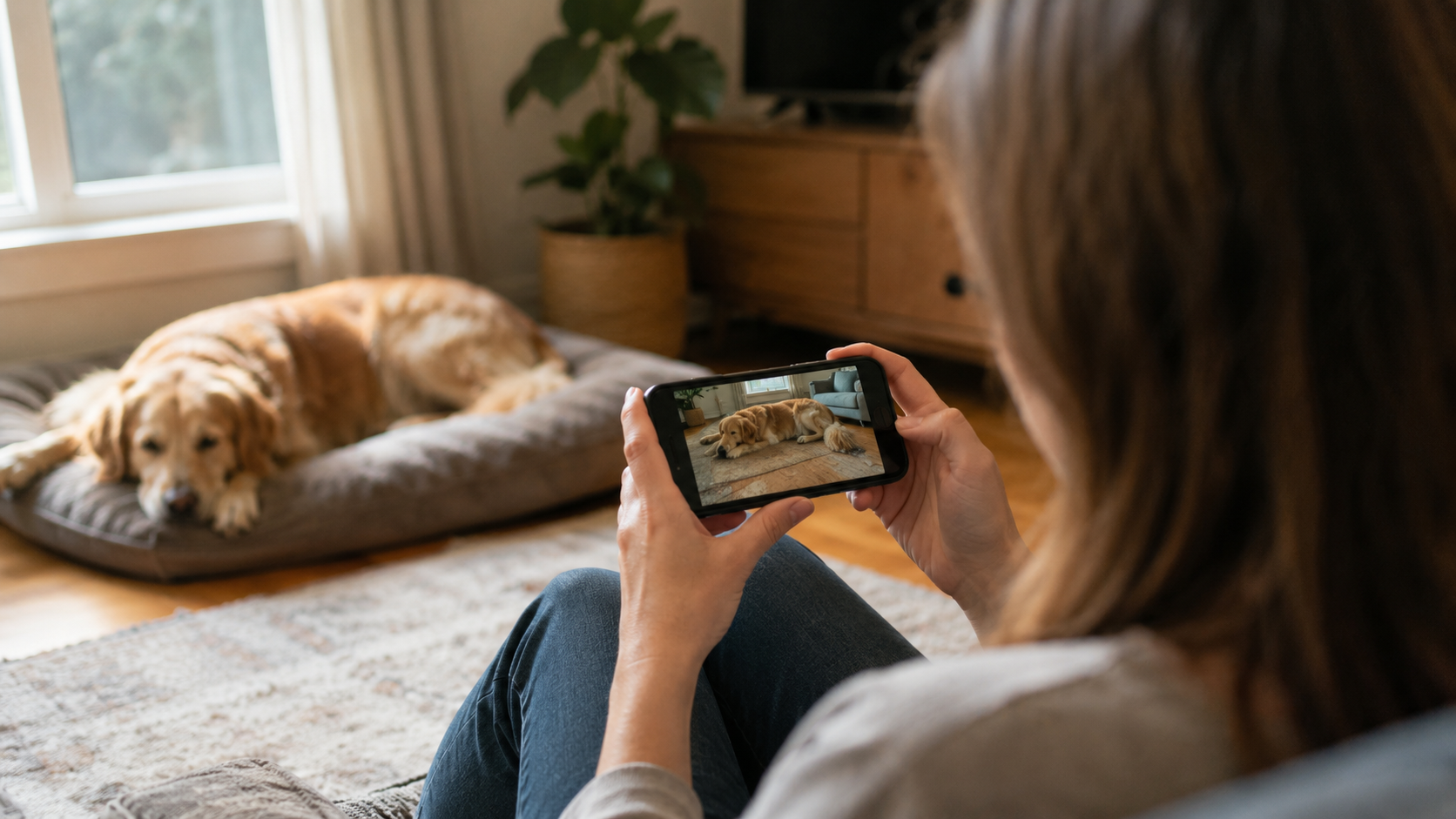
Dog separation anxiety is distress connected to being separated from a person, not simply a dog choosing to misbehave. The most useful first step is to record what happens after you leave, because the timing and pattern of the behavior tell you more than the damage or noise you discover later.
Start with a camera, not a label
Record the first 30 to 60 minutes of an ordinary absence. Note when the behavior starts, whether your dog can eat, whether they keep returning to the exit, and whether they eventually rest.
A brief protest followed by sleep is different from sustained pacing, panting, barking, drooling, escape behavior, or an inability to settle. Our guide to separation anxiety versus boredom explains that distinction in more detail.
Signs that may point to separation-related distress
Look for a pattern rather than one isolated behavior:
- Barking, howling, or crying that continues after you leave
- Pacing, panting, trembling, drooling, or repeated checking of doors and windows
- Destruction concentrated around exits
- Toileting indoors despite otherwise reliable house training
- Refusing valued food when alone
- Frantic greetings or difficulty settling before and after departures
- Escape attempts or self-injury
Barking can also come from outside sounds, frustration, or habit. Read why dogs bark when left alone before assuming the cause. Destruction can also reflect boredom or unmet needs, so use the framework in our guide to destructive behavior when alone.
What to do first
1. Rule out health and sudden-change causes
Pain, illness, medication changes, sensory decline, and changes in the home can alter a dog's ability to settle. Speak with your veterinarian when the behavior is sudden, intense, worsening, or accompanied by other health changes.
2. Find the duration your dog can currently handle
The useful starting point is the length of absence your dog can manage without escalating into distress. That may be shorter than expected. Practice beneath that threshold rather than repeatedly testing how long your dog can endure.
3. Make departures predictable and low-key
Meet your dog's basic needs, prepare a safe resting area, and avoid turning every departure into a dramatic event. A consistent routine can make the sequence easier to understand, but calm body language alone will not cure genuine panic.
4. Increase alone time gradually
Return before distress begins, repeat at a manageable level, and increase the duration in small steps. Progress is rarely perfectly linear. If your dog struggles, reduce the difficulty rather than forcing the next duration.
5. Arrange support for absences that are currently too long
A walker, sitter, friend, family member, day care arrangement, or adjusted schedule may help prevent repeated panic while training progresses. Our guide to helping a dog settle when you are gone all day covers the practical planning side.
Where enrichment fits
Enrichment can support the beginning of a calm routine when a dog is still able to eat and think. It cannot teach comfort with being alone by itself.
If your dog remains settled after the food is gone, an activity may be helping the transition. If distress begins immediately afterward, it may only be delaying the difficult moment. Read whether a lick mat helps separation anxiety or delays it for a camera-based way to judge the result.
Never leave a soft food mat unsupervised until supervised trials show that your dog will not bite, tear, fold, or swallow it. Review our lick-mat home-alone safety guide before using one during an absence.
What not to do
- Do not punish behavior caused by distress.
- Do not use repeated panic as a "cry it out" exercise.
- Do not extend an absence simply because food keeps the dog occupied at first.
- Do not assume one product can cure separation anxiety.
- Do not wait for self-injury or escape behavior to become severe before seeking help.
When professional support matters
Contact your veterinarian when your dog cannot remain safe, stops eating when alone, damages teeth or nails trying to escape, becomes suddenly distressed, or shows severe or worsening symptoms. A veterinarian can assess medical contributors and help you find an appropriately qualified behavior professional.
The goal is not to make a dog tolerate panic quietly. It is to help them build genuine comfort with being alone, at a pace they can handle.
Common questions
What are common signs of separation anxiety in dogs?
Possible signs include persistent barking or crying, pacing, panting, drooling, escape attempts, destruction near exits, toileting indoors, and being unable to eat or settle after the owner leaves. One sign alone does not confirm separation anxiety.
How can I tell separation anxiety from boredom?
Record the first 30 to 60 minutes after leaving. A bored dog may explore and eventually rest, while a distressed dog may remain focused on the exit, pace, vocalize, pant, or ignore valued food.
Should I let my dog cry it out when I leave?
Repeated panic does not teach a frightened dog to feel safe. Practice absences short enough for the dog to remain calm and increase difficulty gradually.
Can enrichment cure dog separation anxiety?
No. Food activities and enrichment may support a calm routine, but they do not cure separation anxiety. Persistent or severe distress needs veterinary assessment and qualified behavioral support.
When should I ask a veterinarian for help?
Seek help when the behavior is sudden, severe, worsening, self-injurious, accompanied by health changes, or preventing the dog from eating, resting, or being left safely.