August 19, 2026
Separation Anxiety or Boredom? How to Tell the Difference
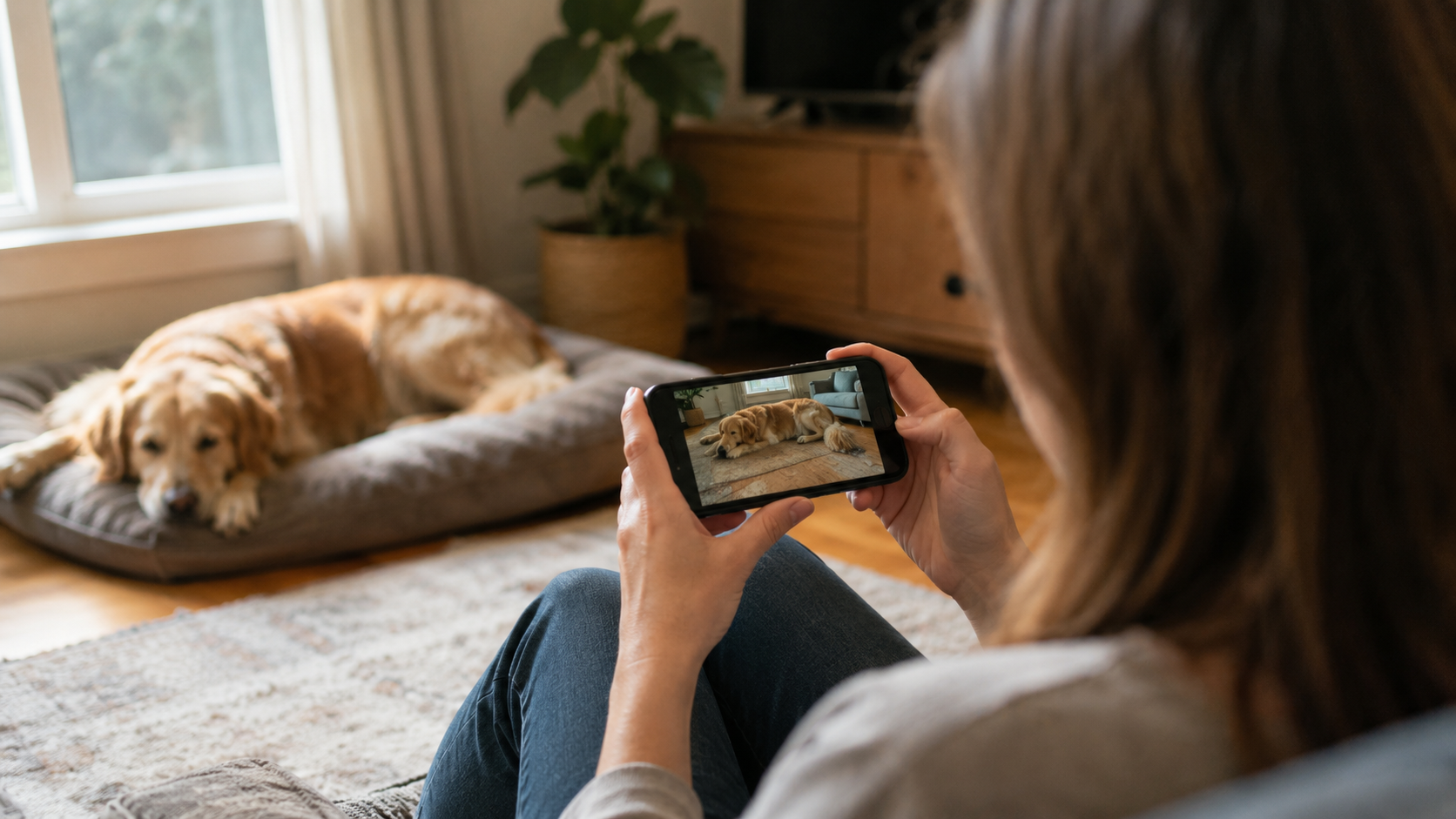
Barking, chewing, pacing, accidents on the floor. A bored dog and a dog with separation anxiety can leave behind almost identical evidence, which is why so many owners spend months on the wrong fix. More toys will not calm a truly anxious dog, and medication is not the answer for a dog who is simply under stimulated. Getting the diagnosis right is the most important step you can take, and you can do most of it yourself.
The one thing that reveals the truth
Record your dog for the first hour after you leave. A phone propped on a shelf or a cheap pet camera is enough. What your dog does in those first minutes tells you far more than what you find when you get home.
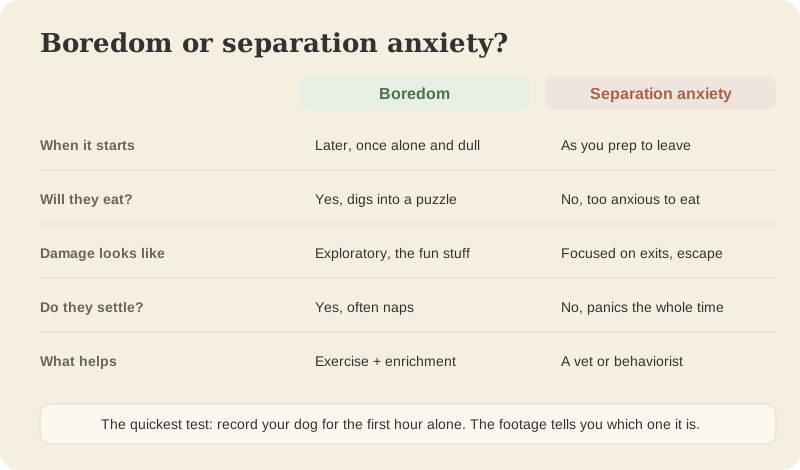
What boredom looks like
- The dog is calm as you leave, or only mildly interested.
- Trouble starts later, once the novelty of being alone wears off and there is nothing to do.
- They will happily eat, chew, and work at a puzzle.
- Destruction is exploratory: the interesting cushion, the bin, the thing that smells good.
- Given something to do, they settle. Many bored dogs nap for long stretches.
What separation anxiety looks like
- Distress begins as you get ready to leave, or within the first few minutes of the door closing.
- Panic signs: constant pacing, drooling, trembling, whining or howling that does not let up.
- They will not eat or take a treat while you are gone, even a favorite one.
- Destruction is focused on exits and escape: doors, window frames, the crate, sometimes to the point of hurting themselves.
- House trained dogs may have accidents purely from the stress.
- They do not settle at all the entire time you are out.
The simplest test inside that: leave a really good food task as you go. A bored dog dives in. An anxious dog cannot eat, because a frightened animal does not feel like eating.
If it is boredom
Good news, because this is very fixable at home, and none of the core fixes require buying anything. Build a routine of exercise and enrichment, and give your dog a job for the day. Start with our guide to keeping a dog busy while you are at work and the wider home alone routine. If the boredom is showing up as a specific behavior, we have focused guides for barking and destructive chewing, and for dogs who cannot settle at night there is the crate guide.
If it is separation anxiety
This is a genuine condition, not disobedience and not a gap in your training. Please do not just pile on more toys or turn to punishment. The effective path is gradual desensitization, teaching your dog in tiny steps that being alone is safe, and it works best with guidance. Talk to your vet, who can rule out anything medical and, for some dogs, prescribe short term support that makes the training possible. A qualified dog behaviorist can build you a proper plan. Noise phobias, like a fear of storms, sit alongside this too, and our guide to fireworks and thunderstorms can help there.
The honest bottom line
Most dogs who struggle alone are bored, and boredom is very fixable. A smaller number have real separation anxiety, which deserves real, kind help rather than a gadget or a harsh correction. Spend one afternoon watching the footage before you spend months guessing. Once you know which one you are facing, the right plan is clear, and your dog gets the help that actually fits.
Keep reading
- The full routine for a dog home alone all day
- Why your dog will not settle in the crate at night
- How to keep your dog busy while you are at work
- How to calm an anxious dog during fireworks and thunderstorms
- How to stop your dog barking when left alone
- How to stop your dog being destructive when left alone