August 19, 2026
How to Help Your Dog Settle When You Are Gone All Day
Leaving for work while your dog watches you from the doorway is one of the hardest parts of the day. If you have ever sat in the car feeling guilty, or come home to a chewed cushion and a dog who cannot seem to settle, you are not doing anything wrong. A dog left alone for eight or ten hours has a lot of empty time to fill, and filling it well is a skill you can teach.
This is a practical routine you can start today, and most of it costs nothing. The goal is not to cure anxiety overnight. It is to make the alone hours calmer and more predictable, so your dog has something to do instead of waiting by the window.
First, tire the right end of your dog
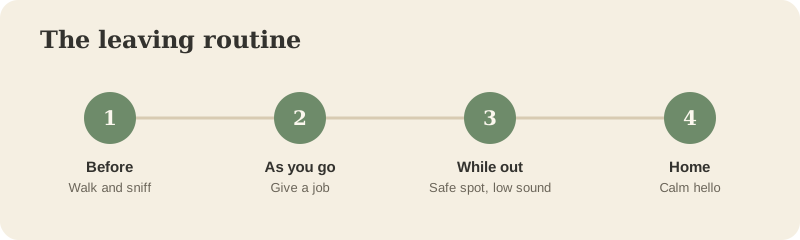
A dog who has used their body and their nose is far more likely to rest. Before a long day alone, aim for two kinds of tired.
- Physical: a proper walk, a game of fetch, or a run in the yard, matched to your dog's age and breed. Twenty to thirty minutes of real movement beats a quick block around the corner.
- Mental: five to ten minutes of sniffing or simple training. Let them sniff on the walk instead of rushing them along. Scent work is quietly tiring, and a worked brain settles better than a tired body alone.
Do this in the morning and you have already changed how the day goes.
Free enrichment you can make from what you already own
You do not need to buy anything to give your dog a job. Try these with what is in your kitchen right now:
- Scatter feeding: instead of a bowl, toss their kibble across the lawn or a towel so breakfast becomes a ten minute hunt.
- The muffin tin game: drop kibble into a muffin tin and put a tennis ball in each cup. Your dog nudges the balls off to find the food.
- Box shredding: fold a few treats into an old cardboard box or egg carton and let them tear it apart. Messy, free, and satisfying.
- A frozen food task: smear wet food, plain yogurt, or a little dog safe peanut butter inside a cup or a hollow toy and freeze it overnight. Frozen makes it last far longer, and licking is naturally soothing for dogs.
- Toy rotation: put half the toys away and swap them each week. The same toys feel new again.
Give one of these to your dog right as you leave. It turns the sound of the door closing into the start of something good. If you want a much bigger library of ideas, see our guide to keeping your dog busy while you are at work.
Practice being alone in small doses
Most dogs only ever experience alone time as one giant eight hour block. You can teach the skill in pieces, and this is the part that builds real resilience.
- Room absences while you are home: walk into another room and close the door for a few seconds, then come back before your dog gets worried. Slowly stretch the time.
- Micro departures on your days off: step outside for thirty seconds, come back in, and act as if it is nothing. Over several days build to a few minutes, then longer. You are proving to your dog that leaving always ends with you returning.
- Keep exits and returns boring: no big emotional goodbye, no frantic hello. Wait until your dog is calm with four paws on the floor before you greet them.
Defuse the departure cues
Dogs learn what your keys, your shoes, and your coat mean. You can take the sting out of those signals. Pick up your keys, then sit down and read your phone. Put your shoes on, then make a cup of coffee. Pick up the leash and go nowhere. Repeated a few times a day, these cues stop predicting that you are about to leave, so they stop setting off the worry.
Teach a calm settle spot
Give your dog a default off switch. Pick a bed or a mat, and any time your dog lies on it calmly while you are home, quietly reward it. Build up how long they hold it. A dog who has learned that this spot means relax and good things happen has somewhere to go when the house is quiet, and that habit holds up when you are gone.
Set the scene before you go
- Leave a comfortable resting spot they already like.
- A little background sound, a radio or TV on low, makes an empty house feel less empty.
- Leave a t-shirt you have worn recently so the room smells like you.
- Notice whether a window view calms your dog or winds them up, and arrange the space to match.
Be honest about the schedule
If your dog is regularly alone for eight to ten hours, a midday dog walker, a trusted neighbor, or daycare a couple of days a week makes a real difference. There is no shame in outside help. It is one of the most effective things you can do, and it does not depend on buying anything.
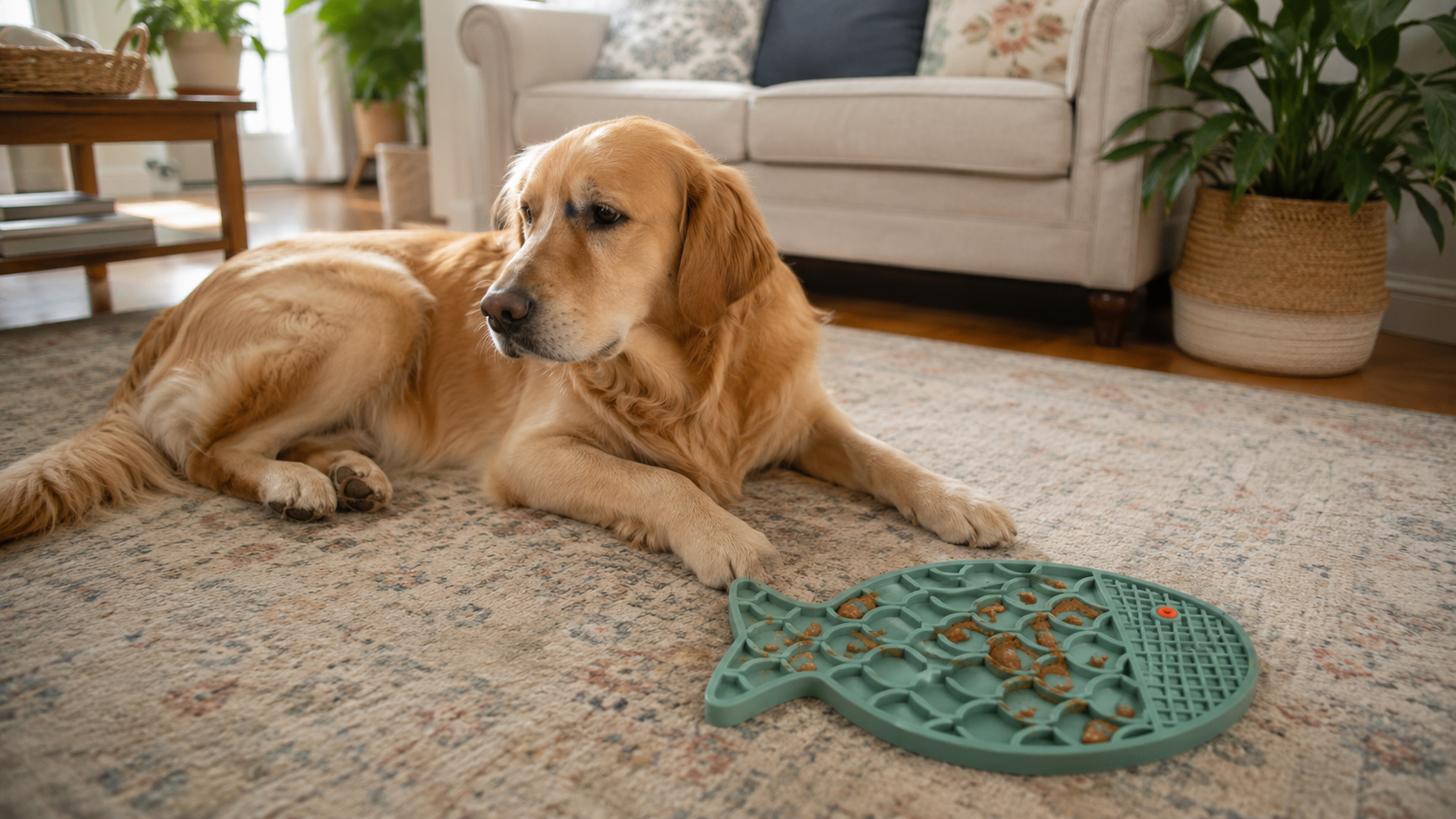
Where a lick mat fits, if you want one
A frozen container or a stuffed hollow toy does the same core job for free, so start there. If you would rather have a tidy, reusable version for the departure moment, a lick mat is a simple option: you spread it thin, freeze it, and give it as you leave so your dog is nose down and busy at the exact moment that tends to unravel first. It is a distraction, not a fix, and it works best as one small part of the routine above.
When it is more than boredom
Some dogs show real distress that a better routine alone will not settle: constant howling, drooling, refusing to eat anything while you are gone, hurting themselves trying to escape, or accidents from a house trained dog. If that sounds like your dog, the kind and effective step is to talk to your vet or a qualified dog behaviorist. Separation anxiety is a genuine condition and it deserves real support. A calming routine can sit alongside that help, but it is not a replacement for it.
The honest takeaway
You cannot remove every hard feeling from a day apart, and you do not have to. Tire your dog first, give them a job the moment you leave, practice alone time in small doses, and keep your comings and goings calm. Do it consistently and most dogs settle into it. Your dog is not waiting to be fixed. They are learning that you always come back, and that the time in between can be quiet and okay.
Keep reading
- Why your dog will not settle in the crate at night
- How to keep your dog busy while you are at work
- How to calm an anxious dog during fireworks and thunderstorms
- How to stop your dog barking when left alone
- How to stop your dog being destructive when left alone
- Separation anxiety or boredom? How to tell the difference