August 20, 2026
Does a Lick Mat Help Separation Anxiety or Only Delay It?
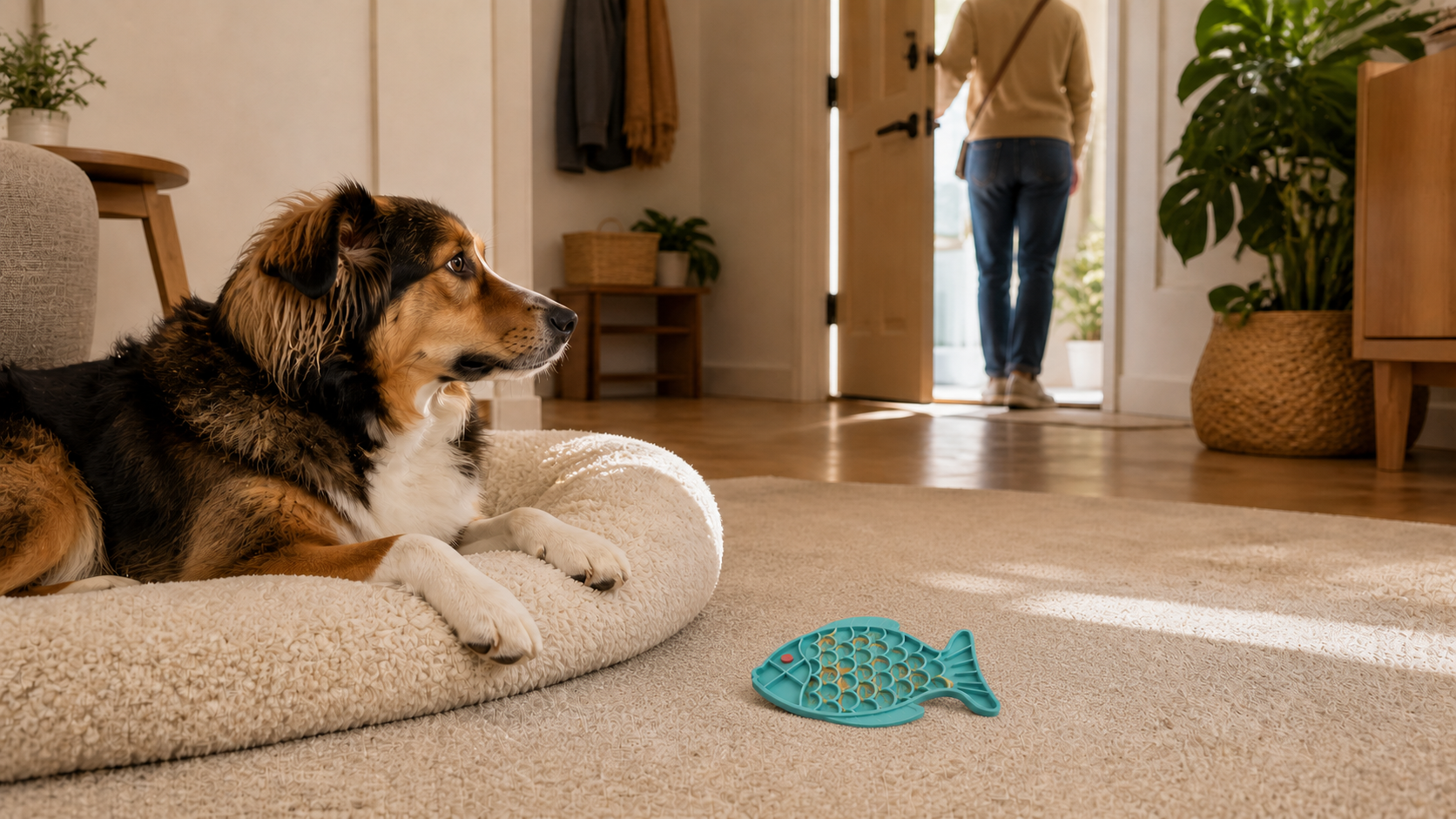
A lick mat can help with the beginning of an absence, but it does not cure separation anxiety. If your dog stays relaxed after the food is finished, the mat may support a routine. If distress starts when the food ends, it is probably delaying the difficult moment rather than resolving it.
Use a camera to tell the difference.
Occupied is not the same as comfortable
A dog can lick because food is valuable while still feeling worried about the owner leaving. The important evidence appears across the whole absence:
- Does the dog approach the mat willingly?
- Can the dog eat at a normal pace?
- What happens immediately after the food is gone?
- Can the dog lie down and sleep?
- Does the dog pace, pant, drool, vocalize, toilet, or focus on exits?
The RSPCA lists vocalizing, pacing, destruction around exits, toileting, panting, salivation, self-injury, vomiting, and refusing food among possible signs of separation-related distress. It recommends camera monitoring because some signs are hidden when the owner is present. See its separation-related behavior guide.
Three possible outcomes
It supports a manageable routine
The dog licks with a relatively loose body, finishes, then rests or explores calmly. In this case, the mat may be a useful part of an absence the dog can already handle.
It delays distress
The dog appears fine until the last food is gone, then cries, paces, or goes to the exit. The activity bought time but did not teach comfort with the remaining absence.
The dog is too worried to use it
The dog refuses favorite food, abandons it when the owner leaves, or shows distress during preparation. The current step may be too difficult.
Build the missing skill gradually
Practice absences that end while the dog is still calm. If distress starts after a certain point, make the next repetition comfortably shorter rather than testing the same limit again.
Teach resting while you are home, then add tiny moments out of sight. Keep departures and returns low-key. Vary easy durations so every session does not become a predictable climb toward difficulty.
VCA's overview of separation-anxiety management describes using food toys during successful short practices and returning before the dog reaches distress.
Do not use the mat to stretch an unsafe absence
If a frozen mat lasts longer, that does not mean the dog is ready to remain alone for longer. Duration should follow the dog's emotional ability, not the food timer.
Also confirm that the dog uses the mat safely before considering unsupervised use. Read our safety guide.
When to seek help
Contact your veterinarian when distress is intense, persistent, worsening, sudden, or includes escape attempts, self-injury, heavy drooling, repeated toileting, or refusal to eat. Health problems can affect behavior, and a qualified professional can build a plan around the individual dog.
Do not punish damage or vocalizing after returning. The dog cannot connect delayed punishment with an earlier action, and added fear can make departures harder.
The honest answer
A lick mat may make a departure transition easier. It cannot teach the complete skill of being alone, and it is not a cure for separation anxiety.
Use it as one optional part of a gradual, camera-informed routine. Judge success by what the dog does after the food is gone.
Keep reading
Common questions
Can a lick mat cure separation anxiety?
No. It may support a calm departure routine, but it does not cure separation anxiety or replace gradual training, veterinary assessment, or qualified behavioral care.
How can I tell whether it helps or only delays distress?
Use a camera. If your dog remains settled after the food is gone, it may be supporting the routine. If pacing, crying, panting, or exit-focused behavior begins immediately afterward, it may only be delaying distress.
What if my dog will not eat when I leave?
Refusing valued food while alone can be a sign that the dog is worried. Shorten the absence and speak with your veterinarian if the pattern persists or is intense.
Should I leave for longer because the mat keeps my dog busy?
No. Practice within a duration your dog can handle calmly. A food activity should not be used to push the dog past the point where distress begins.