August 19, 2026
How to Stop Your Dog Being Destructive When Left Alone
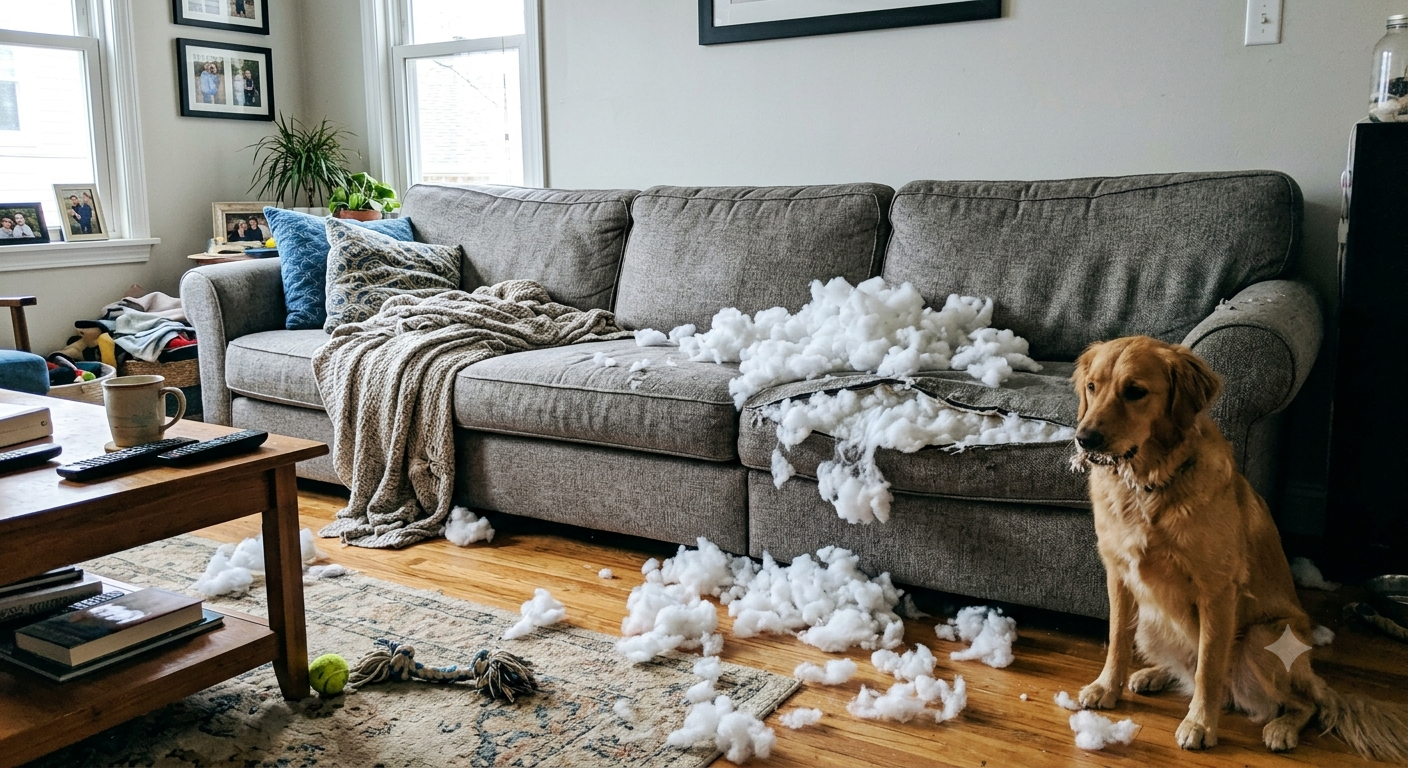
Coming home to a shredded cushion, a chewed door frame, or the contents of the bin spread down the hall is disheartening, especially when it keeps happening. Before you despair, know two things. First, your dog is almost never doing it out of spite. Second, destruction when left alone has a handful of common causes, and once you match the fix to the cause, most of it stops.
Why dogs wreck the house when alone
- Boredom. By far the most common. A smart, under stimulated dog with hours to fill will make its own entertainment, and chewing and shredding feel great.
- Puppy teething and adolescence. Young dogs chew because their mouths need it and their impulse control is still growing.
- Seeking something. Bins, counters, and laundry baskets smell amazing. Much destruction is just a good nose following a good smell.
- Panic. A dog with separation anxiety may claw at doors and windows or chew near exits, trying to get out. This looks different from boredom and matters a lot, so it is worth learning to spot.
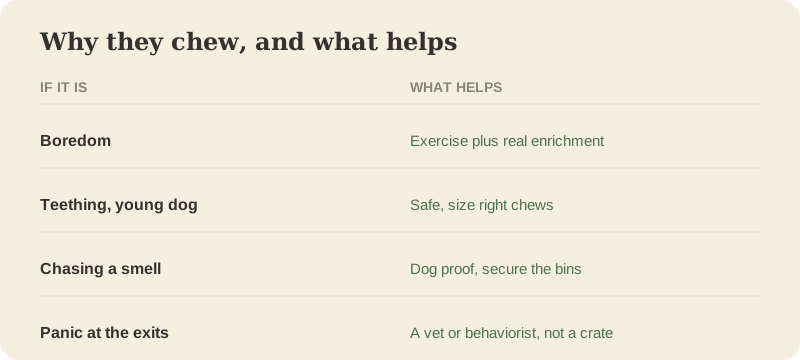
If it started suddenly, look for a recent change: a new schedule, a house move, a lost companion, or something physical. A sudden shift is always worth a mention to your vet.
Fix the cause, not the mess
Meet the needs first. A walk with sniffing and a proper puzzle or chew before you leave takes the fuel out of destructive energy. Our guide to keeping a dog busy is the place to start, and the wider home alone routine ties it together.
Give legal outlets for the mouth. Dogs need to chew, so make sure the right things are the easy things. A safe, size appropriate chew or a frozen food task gives the urge somewhere acceptable to go.
Dog proof the space. For now, manage the environment. Clear the counters, secure the bin, put shoes and remotes away, and set up a smaller safe area rather than giving a bored dog the run of the house.
Do not punish after the fact. Coming home and telling off your dog does not work, because dogs do not connect a scolding to something they did hours earlier. All it teaches is that your return is tense, which can make everything worse. Prevent and redirect instead.
Watch what actually happens
As with barking, a phone or a cheap camera pointed at the room for the first hour is the fastest way to learn the truth. Calm, exploratory chewing that settles after a while points to boredom. Frantic scratching at doors, drooling, and pacing that never stops points to distress, which is a different problem with a different answer.
Where a lick mat fits, if you want one
A homemade frozen food container or a stuffed hollow toy does the same job for free, so start there. If you want a tidy reusable option, a lick mat gives your dog a satisfying, long lasting task at the moment you leave, redirecting that energy away from your furniture. It is one tool among the fixes above, a distraction rather than a cure.
When it is separation anxiety
If the destruction is focused on exits, comes with signs of panic, or your dog injures themselves trying to escape, this is not boredom and it is not a training failure. It is separation anxiety, a genuine condition, and the right next step is your vet or a qualified behaviorist. Our guide to telling anxiety from boredom will help you decide which one you are dealing with.
Keep reading
- The full routine for a dog home alone all day
- Why your dog will not settle in the crate at night
- How to keep your dog busy while you are at work
- How to calm an anxious dog during fireworks and thunderstorms
- How to stop your dog barking when left alone
- Separation anxiety or boredom? How to tell the difference