August 19, 2026
Why Your Dog Will Not Settle in the Crate at Night, and How to Fix It
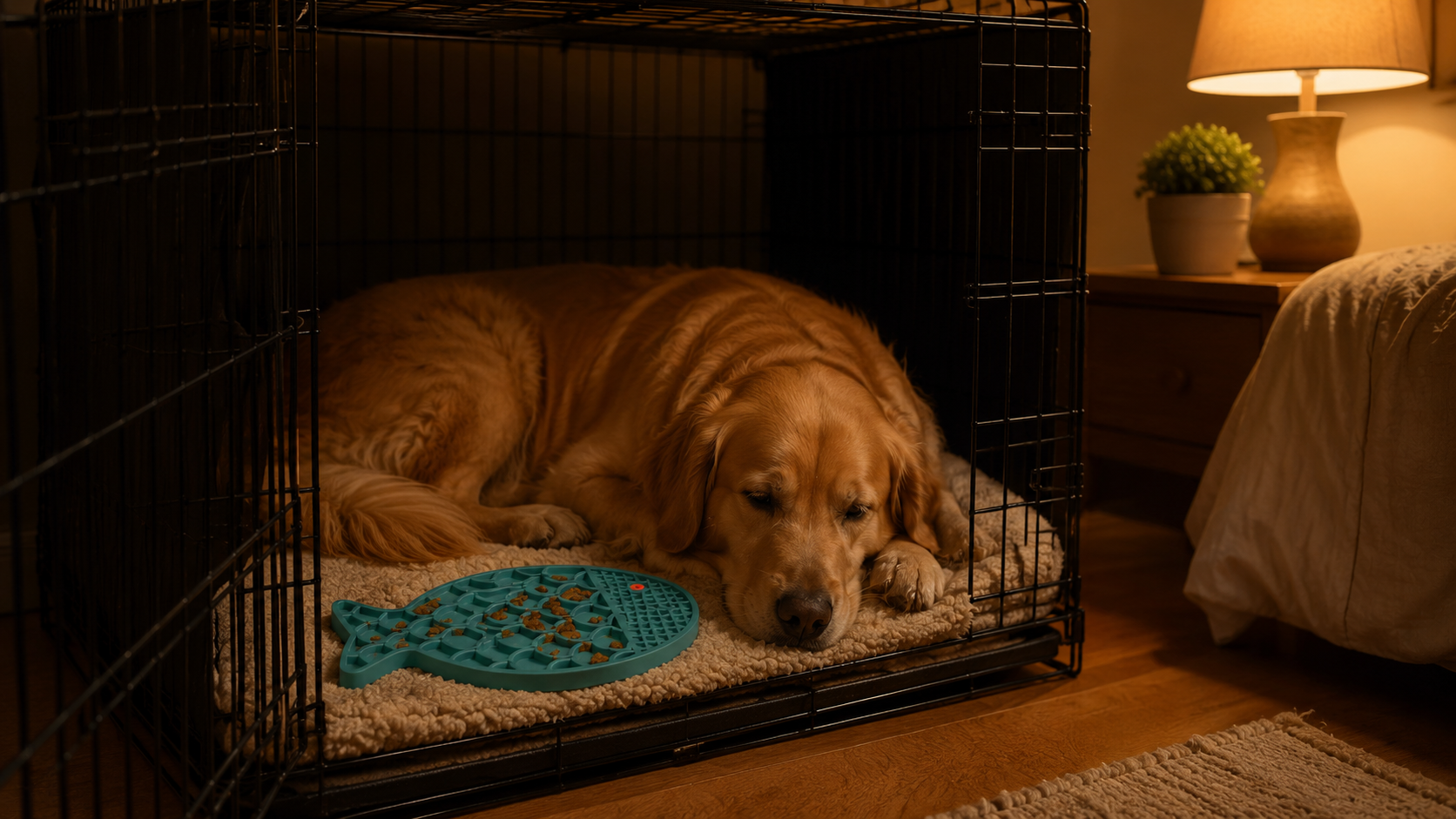
The whining starts the moment the lights go off. Then the scratching, the circling, maybe a bark that jolts you awake at two in the morning. If you are lying there exhausted and starting to resent a crate you bought to help, you are not failing. A dog who will not settle in the crate is almost always telling you something specific, and once you know what to listen for, most of it is fixable at home.
The aim here is simple. The crate should become a den your dog chooses, not a box they are shut inside. When it feels like a trap, they fight it. When it feels safe, they sleep.
First, rule out the obvious
Before any training, check these, because no routine fixes a real physical need.
- Do they need to toilet? Puppies and older dogs often genuinely cannot last the night. A last toilet trip right before bed, and a calm middle-of-the-night trip when needed, is not spoiling them.
- Have they burned off the day's energy? A dog with fuel left in the tank cannot switch off. A real walk and a little sniffing or training in the evening changes bedtime completely.
- Is the crate the right size? Big enough to stand, turn, and lie flat, but not so cavernous it feels exposed. A cover over the top and three sides makes many dogs feel far more secure.
- Could something hurt? Sudden new night waking, especially in an older dog, can be pain or a bladder issue. If it appears out of nowhere, mention it to your vet.
Rebuild the crate as a good place
If your dog already hates the crate, stop using it as a nighttime dumping spot and start again from a positive place. This takes days, not months.
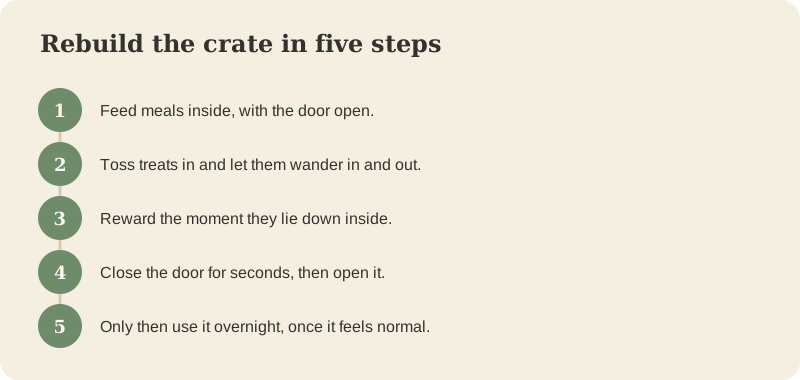
- Feed meals in it with the door open, so the best part of the day happens inside.
- Toss treats in at random through the day and let your dog wander in and out freely. Never close the door on them at this stage.
- Reward calm, not frantic. The moment they lie down inside, quietly drop a treat between their paws.
- Close the door for seconds, then open it, while they are busy with a chew or a frozen food task. Build the time up slowly.
- Only then use it overnight, once being inside already feels normal and good.
The nighttime routine that works
- Keep the last hour before bed calm. No wild games that leave them wired.
- Final toilet trip, every night, same order of events. Dogs settle on predictability.
- Put the crate near your bed at first. Many dogs panic less when they can hear you, and you can move it further away over a week or two once they are settling.
- Give them something to do as the lights go off. A frozen food task or a stuffed chew turns bedtime into wind-down instead of lockup.
What about the whining
The hard part is telling a genuine need from a request for company. A good rule: a dog who needs to toilet usually gets restless and may go quiet then urgent, while a dog asking for attention often settles the instant you appear. Take them out calmly and with no fuss if you think it is real, and do not turn it into playtime. For pure attention whining, try not to reward the loudest moment by rushing over, but do not leave a genuinely distressed dog to panic either. If you are unsure, err toward checking. Trust is built by showing up, not by winning a standoff.
Where a lick mat fits, if you want one
A frozen stuffed toy or a container smeared with wet food and frozen does this job for free, so start there. If you want a tidy, reusable version, a lick mat given at bedtime can help your dog link the crate with something calming to do. The licking itself is soothing. It is a distraction to smooth the settling moment, not a fix, and it works best on top of the routine above.
When the crate is the wrong tool
This matters. A dog with true separation anxiety can panic in a crate and hurt themselves trying to get out, bending bars, breaking teeth, or soiling in distress. Forcing a crate on that dog can make everything worse. Signs to take seriously include frantic escape attempts, drooling, and injury. If that is your dog, do not push the crate. A dog safe gated room is often kinder, and the real next step is your vet or a qualified behaviorist. Separation anxiety is a genuine condition and it deserves proper support.
Keep reading
- The full routine for a dog home alone all day
- How to keep your dog busy while you are at work
- How to calm an anxious dog during fireworks and thunderstorms
- How to stop your dog barking when left alone
- How to stop your dog being destructive when left alone
- Separation anxiety or boredom? How to tell the difference