August 20, 2026
Why Your Dog Cries After Finishing a Lick Mat
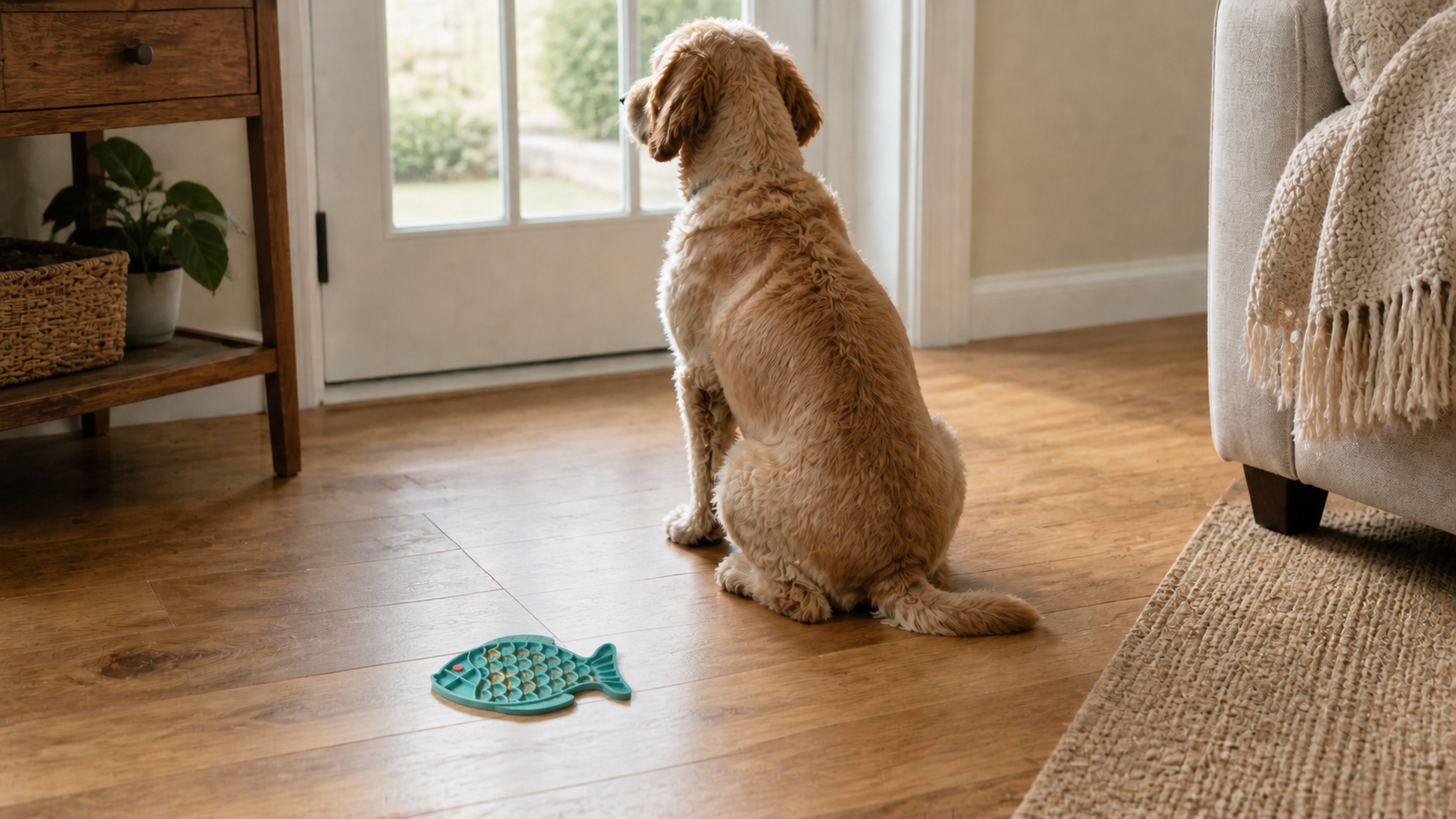
If your dog starts crying as soon as a lick mat is empty, the mat probably helped them through the first part of your departure but did not teach them to remain settled afterward. That does not prove separation anxiety on its own. It tells you to watch what happens next, shorten the absence, and build calm time without relying on the food activity to do all the work.
This is a common and confusing pattern. Your dog may look completely absorbed while licking, then walk to the door, pace, whine, or bark the moment the food is gone. The useful question is not simply whether the mat worked. It is what your dog does when the activity ends.
What the lick mat did, and what it did not do
A food activity can give a dog something predictable to focus on during a difficult transition. It can also help create a positive association with a resting place or departure routine. But occupation and comfort are not the same thing.
If your dog remains relaxed after finishing, lies down, explores calmly, or goes to sleep, the activity may be supporting a routine they can already handle. If distress begins immediately after the last bit of food is gone, the activity may only be delaying the moment when being alone becomes difficult.
The VCA guidance on preparing dogs for alone time recommends returning before a dog finishes its food toy during early practice. This allows the dog to experience a successful separation while still calm instead of repeatedly reaching the point where barking or whining begins.
Use a camera instead of guessing
Record the first 30 to 60 minutes after you leave. Note the time of each change rather than judging the whole absence as good or bad.
Watch for:
- How long the food activity lasts
- What your dog does immediately afterward
- Whether crying stops after a brief period or continues
- Pacing, panting, trembling, drooling, or repeated trips to the exit
- Scratching or chewing around doors, windows, gates, or crates
- Whether your dog accepts other food
- Whether your dog can lie down and sleep
The RSPCA lists vocalising, pacing, destruction near exits, toileting, trembling, panting, salivation, self-injury, and refusing food among possible signs of separation-related distress. It also recommends using a camera because some signs only appear when the owner is absent. See its guide to separation-related behaviour.
One sign is not a diagnosis. The pattern, intensity, timing, and ability to recover matter more.
Three patterns the footage may show
1. Brief frustration, followed by settling
Your dog finishes, complains for a short period, then lies down or begins another calm activity. This still deserves attention, but it is different from continuous distress. Shorter practice sessions and a predictable settle routine may help.
2. The dog is ready for food, but not ready for the full absence
Your dog eats enthusiastically and appears comfortable until the food ends, then cannot settle. In this case, the duration may be moving faster than the dog's alone-time skill. Making the food last longer can buy time, but gradual practice is what teaches the missing part.
3. Distress continues or escalates
Your dog cries continuously, paces, pants, drools, refuses food, toilets unexpectedly, damages exits, or tries to escape. A mat is not an appropriate treatment for this level of distress. Contact your veterinarian and ask about support from a qualified, force-free behavior professional.
What to do next
Shorten the practice
Return while your dog is still calm. If the crying begins at eight minutes, the next practice should be comfortably shorter than eight minutes, not another test of whether the dog can endure longer.
Build duration gradually and vary it. Several calm, easy repetitions teach more than one long absence that ends in distress.
Teach settling while you are still home
Use the same resting area when you are nearby but occupied. Reward calm lying down, then briefly step out of sight and return. This separates the skill of relaxing from the much harder event of a full departure.
Keep the routine predictable
A toilet break, appropriate movement, sniffing, a quiet settling period, and then a food activity can create a clear sequence. Avoid making the departure frantic or emotional. Our home-alone routine shows how the pieces fit together.
Do not punish the crying or damage
Punishment after you return cannot teach a dog what to do during an earlier moment of distress. It may also add more worry to the departure and return routine. Clean up quietly, review the footage, and adjust the next practice.
Use the mat safely
A lick mat should be introduced under supervision. Watch whether your dog licks the surface or tries to fold, bite, or tear it. Inspect it before every use and remove it if it is damaged.
VCA's enrichment-toy guidance recommends choosing a size-appropriate, durable item that will not fracture into swallowable pieces and supervising initial use. A soft silicone mat is not suitable for unsupervised use with a dog that chews or swallows non-food objects.
Choose dog-safe food, account for it in the dog's normal daily intake, and check ingredients carefully. Some peanut butter products contain xylitol, which is dangerous to dogs. The VCA puppy guidance specifically warns owners to check peanut butter for xylitol.
When to get help
Speak with your veterinarian if your dog:
- Cannot settle during absences
- Refuses favorite food when alone
- Injures themselves or attempts to escape
- Shows heavy panting, drooling, trembling, or repeated toileting
- Becomes worse despite gradual practice
- Has a sudden change in behavior
A veterinarian can help rule out health problems and direct you to appropriate behavioral support. The goal is not to label the dog from one video. It is to prevent repeated distress while you find the right level of help.
The honest answer
A lick mat can make a departure transition easier, but it cannot teach the entire skill of being alone. If your dog cries when the food ends, treat that moment as useful information. Watch the footage, return before distress begins during the next practice, build calm duration gradually, and seek qualified help when the behavior is intense or persistent.
The mat can be one part of a calm routine. It should never be the whole plan.
Keep reading
Common questions
Why does my dog cry as soon as the lick mat is finished?
The mat may have occupied your dog during the first part of the separation without teaching them to remain settled afterward. Camera footage can help you see whether the crying is brief frustration or part of a wider pattern of distress.
Does this mean my dog has separation anxiety?
Not by itself. Look at when the behavior starts, whether your dog can eat, whether they pace or focus on exits, and whether they eventually settle. Ask your veterinarian or a qualified behavior professional for help if the behavior is intense or persistent.
Should I make the lick mat last longer?
A longer activity may make the transition easier, but it does not teach comfort with being alone by itself. Practice shorter absences that end while your dog is still calm and increase the duration gradually.
Can I leave a silicone lick mat with my dog unsupervised?
Supervise the first uses and inspect the mat before every session. Do not leave a soft mat with a dog that bites, tears, or swallows non-food items, and remove any mat that is damaged.