August 21, 2026
Why Does My Dog Follow Me Everywhere? Normal Closeness vs Anxiety
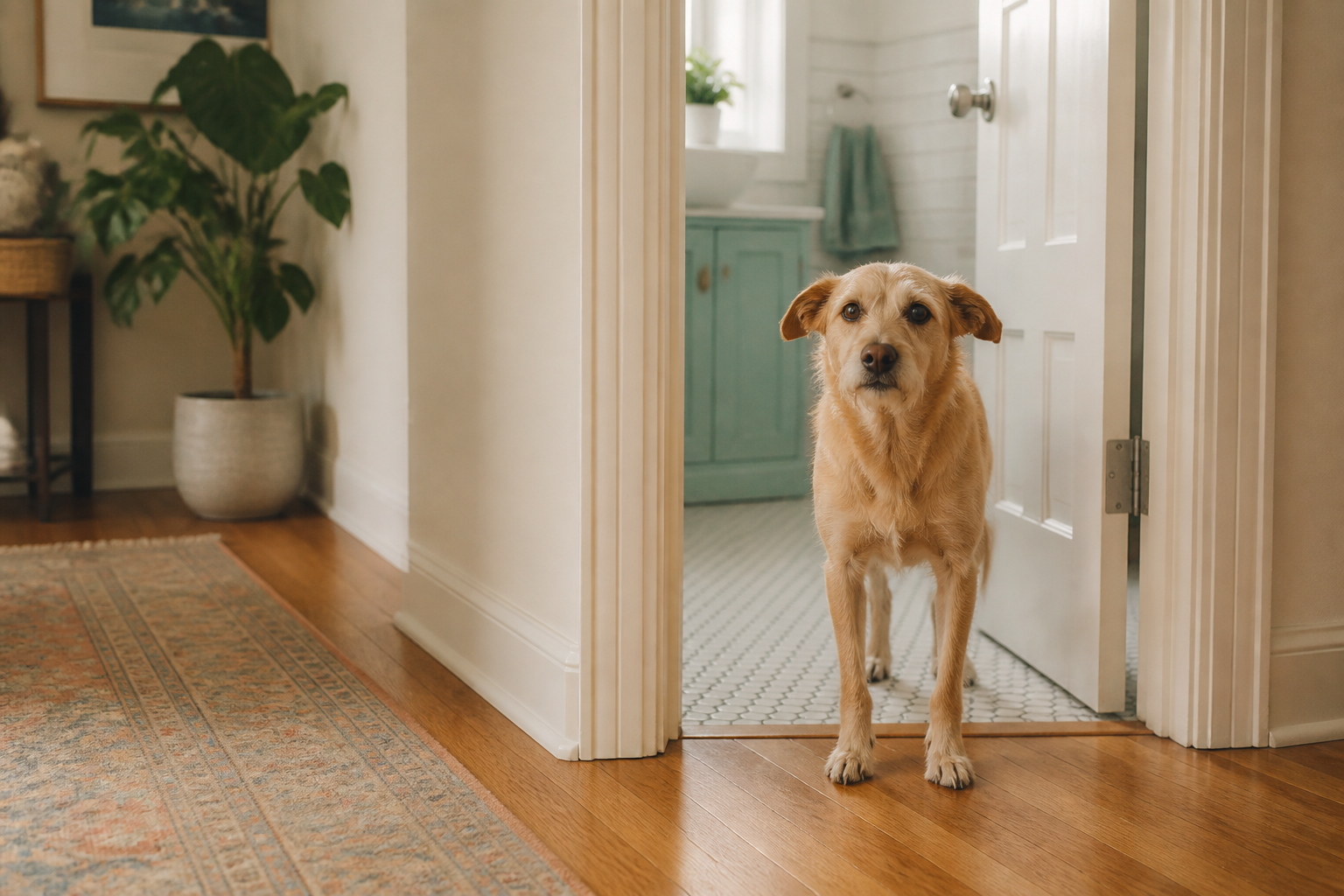
Your dog following you into the kitchen, bedroom, and even the bathroom does not automatically mean something is wrong. Dogs are social, following often becomes a rewarded habit, and you may simply be the most interesting thing in the house.
The important question is not, “Does my dog follow me?” It is, “Can my dog relax when following me is not possible?” A dog who shadows you at home but sleeps calmly after you leave is different from a dog who panics the moment a door closes.
Six common reasons your dog follows you everywhere
1. They like being near you
You provide food, walks, play, safety, and access to the outside world. Staying close to you is often normal social behavior, especially for a new dog still learning the home.
2. Following has been rewarded
Think about what happens when your dog appears beside you. Do they get eye contact, conversation, petting, food, or an open door? None of that is bad, but it can teach a simple pattern: following you makes useful things happen.
3. They need something
Before treating clinginess as a behavior problem, check the ordinary needs. Your dog may need water, a toilet break, activity, rest, or relief from a room that is too hot, cold, or noisy.
4. They have not learned another option
A dog cannot choose to settle on a bed across the room if that behavior has never been made worthwhile. Following may be the only routine they understand.
5. Something in life changed
Moving house, a new work schedule, visitors, a new baby, the loss of a person or animal, and unfamiliar sounds can all make a dog seek more contact. Newly adopted dogs may also follow closely while they work out where safety is.
6. They are uncomfortable or anxious
Sudden clinginess can accompany pain, illness, sensory changes, or cognitive changes in older dogs. Following can also occur alongside separation anxiety, but it is not enough to diagnose it on its own.
The quickest way to tell normal following from a real problem
Watch what happens during a short, ordinary separation.
Set up a phone or pet camera, leave as you normally would, and review the first part of the absence. Do not judge only by whether your dog barks. Quiet dogs can still be distressed.
Signs your dog is probably coping
- They look around and then settle.
- Their body remains loose rather than tense or frozen.
- They engage normally with a safe activity.
- They nap, change resting position, or calmly watch the environment.
- They can remain in another room while you are home.
Signs the following may be part of separation-related distress
- Pacing, panting, trembling, or repeated vocalizing begins around departure.
- They fixate on the door or try to escape.
- They drool heavily, toilet in distress, or damage exits.
- They refuse food they normally value.
- They cannot settle when you are behind even an interior door.
- Their behavior escalates rather than easing after you leave.
If the behavior appears only after you have been gone for a long time, boredom, a toilet need, or the length of the absence may be contributing. This guide can help you separate anxiety from boredom.
How to build independence without rejecting your dog
The goal is not to make your dog stop loving your company. It is to give them another safe option.
Reward the moments they choose space
When your dog lies on a bed, settles across the room, or starts an independent activity, quietly place a treat between their paws or offer calm praise. Reward the choice before calling them back to you.
Teach a comfortable settle place
Choose a bed or mat in a location your dog already likes. Reward looking at it, stepping onto it, lying down, and staying there while you move around nearby. Keep the early sessions easy.
This is not banishment. The resting place should feel safe and optional during training.
Practice tiny separations while you are home
Use a baby gate or step briefly out of sight. Return before worry grows. If your dog stays relaxed, repeat and slowly add distance or time. Change one difficulty at a time.
If closing the bathroom door triggers immediate crying, begin with the door partly open or remain visible behind a gate. Starting below the distress point is what makes progress possible.
Make your movements less predictive
Sometimes a dog follows because every movement leads to something important. Stand up, move a few steps, and sit down again. Pick up your keys without leaving. Put on your shoes and continue making breakfast. Ordinary repetitions make these cues less urgent.
Give them something appropriate to do
A safe chew, part of a meal in an enrichment toy, sniffing games, or a familiar food activity can support independent time. Introduce every item under supervision first. If your dog tears, folds, or swallows pieces, it is not an unattended activity for that dog.
A lick mat can be one optional activity for a dog who uses it safely. It does not treat separation anxiety, and the useful evidence is what your dog does after the food is gone.
What not to do with a clingy dog
- Do not punish them for following you.
- Do not suddenly shut them away for long periods to “teach independence.”
- Do not assume affection caused separation anxiety.
- Do not use food to push a distressed dog through an absence they cannot handle.
- Do not wait for a dog to injure themselves before asking for help.
When sudden following needs a vet check
Contact your veterinarian if the following is new or markedly stronger, particularly when it appears with changes in appetite, sleep, movement, toileting, awareness, breathing, or tolerance of touch. Behavior can change when a dog is in pain even if they are not limping or crying.
A veterinarian can check for physical causes and refer you to a suitably qualified behavior professional when needed.
The simple test
A dog can be affectionate, follow you to the bathroom, and still cope beautifully alone. Following becomes concerning when your dog cannot feel safe without access to you.
Do not train them to care less about you. Teach them that resting a few feet away, staying behind a gate, and eventually being home alone can also be safe.
Keep reading
- How to get a puppy used to being alone
- The complete dog separation-anxiety guide
- How to stop barking when you leave
- What to do when your dog finishes a lick mat and then cries
- How to help your dog settle when you are gone all day
Sources used for the guidance
Common questions
Does my dog following me everywhere mean separation anxiety?
Not by itself. Many dogs follow because they enjoy company, expect attention, need something, or have formed a habit. Separation anxiety is about distress during separation, so use a camera to see what your dog does after you leave.
Why has my dog suddenly become clingy?
A sudden behavior change can follow a move, schedule change, frightening event, loss of a companion, pain, illness, or age-related changes. If the clinginess is new, unusual, or accompanied by other symptoms, arrange a veterinary check.
Should I ignore my dog when they follow me?
Do not punish or frighten your dog for following. Instead, quietly reward the behavior you want, such as settling on a bed or choosing an independent activity. You can also make brief, easy separations part of the daily routine.
How can I teach a Velcro dog to be more independent?
Begin while you are home. Reward calm settling a short distance away, use a baby gate for very brief separations, provide a safe resting place, and increase distance gradually. If your dog becomes distressed, make the next step easier.