August 20, 2026
Why a Lick Mat Calms Some Dogs but Excites Others
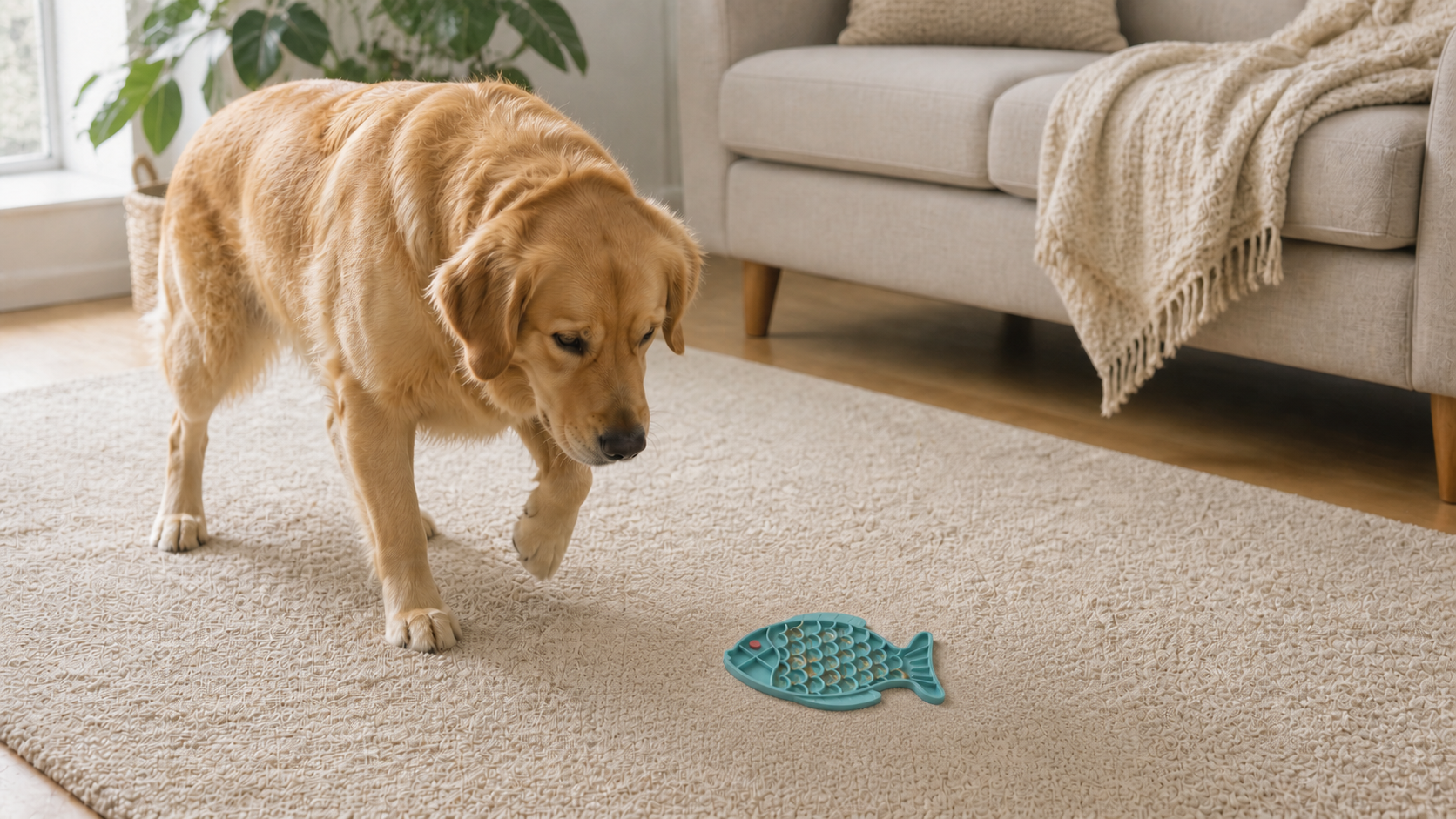
Lick mats calm some dogs because the activity is predictable, achievable, and compatible with settling. Other dogs become more excited or frustrated because the food is too difficult to reach, the preparation predicts a highly emotional event, or the dog bites rather than licks.
The mat is not automatically calming. The dog's response tells you what it is doing.
Four reasons the same mat creates different reactions
The difficulty is different for each dog
A thin soft spread may be easy for one dog. Deep frozen food may cause another to scrape, paw, bark, or bite. Enrichment should be challenging enough to hold interest but easy enough to succeed.
VCA guidance recommends beginning with an appropriate difficulty and increasing it gradually. The goal is enjoyment without frustration or boredom.
Food anticipation raises arousal
If opening the freezer, preparing peanut butter, or picking up the mat always predicts a departure, grooming, or another intense event, your dog may become activated before the mat reaches the floor.
Prepare it quietly and sometimes offer it during ordinary calm moments. This prevents the mat from becoming a single, dramatic signal.
The dog has learned to bite
Some dogs discover that frozen food breaks away faster when they use their front teeth. That turns a licking activity into a chewing problem and can damage a soft mat.
Return to an unfrozen, thin spread and supervise. If the dog still bites, choose another activity. Do not keep making the task harder in the hope that the dog will eventually lick.
The emotional problem is bigger than the activity
A worried dog may eat rapidly, refuse food, or abandon the mat as soon as the owner leaves. Food engagement alone does not prove the dog feels safe.
The RSPCA includes refusing food or food toys among possible signs of separation-related distress and recommends using a camera to observe hidden signs. See its separation guidance.
Read the whole sequence
Observe your dog before, during, and after the mat.
Before:
- Can your dog wait or settle while it is prepared?
- Does seeing the mat trigger frantic movement or vocalizing?
During:
- Is the body relatively loose?
- Is the dog licking steadily rather than biting or pawing?
- Can the dog pause and resume?
After:
- Does the dog settle, explore calmly, or walk away?
- Does frustration start when the food ends?
- Does distress appear when you leave?
A simple adjustment ladder
- Offer a small, familiar, soft spread.
- Keep the first sessions brief and supervised.
- Prepare it without creating excitement.
- Increase texture or chilling only when the dog remains relaxed.
- Stop if biting, guarding, or frustration appears.
- Use another activity if the mat is not a good match.
The honest answer
Licking can be a useful part of a settling routine, but no object has the same emotional effect on every dog. Success is not measured by how long the dog stays busy. It is measured by safe use, relaxed engagement, and the ability to remain settled afterward.
If the mat reliably increases arousal, simplify it or stop using it. Your dog does not need to enjoy a popular enrichment idea.
Keep reading
Common questions
Why does my dog get excited when I prepare a lick mat?
The preparation can predict valuable food, so anticipation may raise arousal before licking begins. Prepare it out of sight, wait for a calmer moment, and place it down without a highly exciting ritual.
How can I tell whether the mat is frustrating my dog?
Watch for barking, repeated pawing, hard biting, flipping the mat, frantic movement, walking away repeatedly, or guarding. Make the food easier to access and stop if frustration continues.
What if my dog bites instead of licks?
Use a thin soft spread under close supervision. If biting continues, remove the mat and choose a different activity rather than leaving the silicone available to chew.
Do all dogs find licking calming?
No. Dogs differ in food motivation, experience, frustration tolerance, health, and emotional state. Judge the effect from your dog's body language and recovery, not from a universal claim.